A 3D illusion is a flat print that reads as depth: a floor that seems to drop away, a wall that opens onto a street, a frame people step into for a photo. The printer doesn’t build anything up. It prints flat UV ink straight onto the wall or floor, and the art does the rest with perspective, shadow and scale.
That’s the difference from a 3D printer, and it’s why these jobs sell. They’re the walls and floors people stop at, photograph and post.
Floors
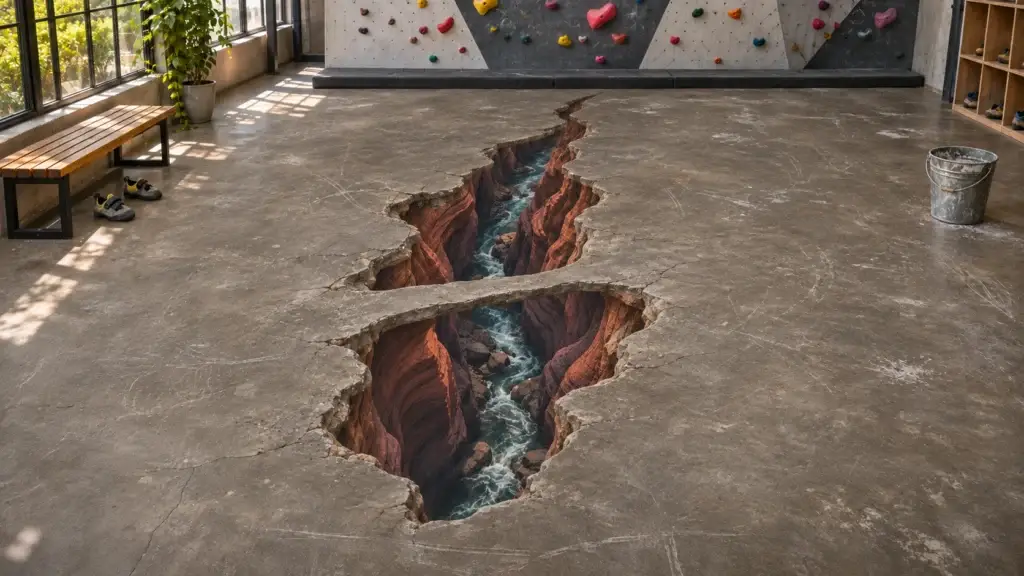
- Drop-offs and cliff edges at a gym or climbing gym entrance
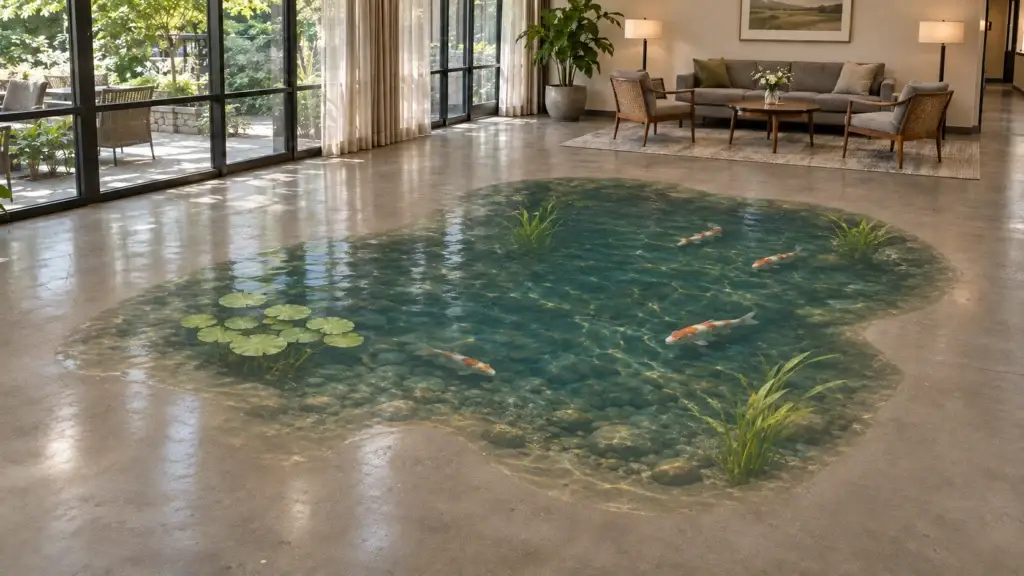
- Water, lava or a koi pond in a lobby or kids’ area
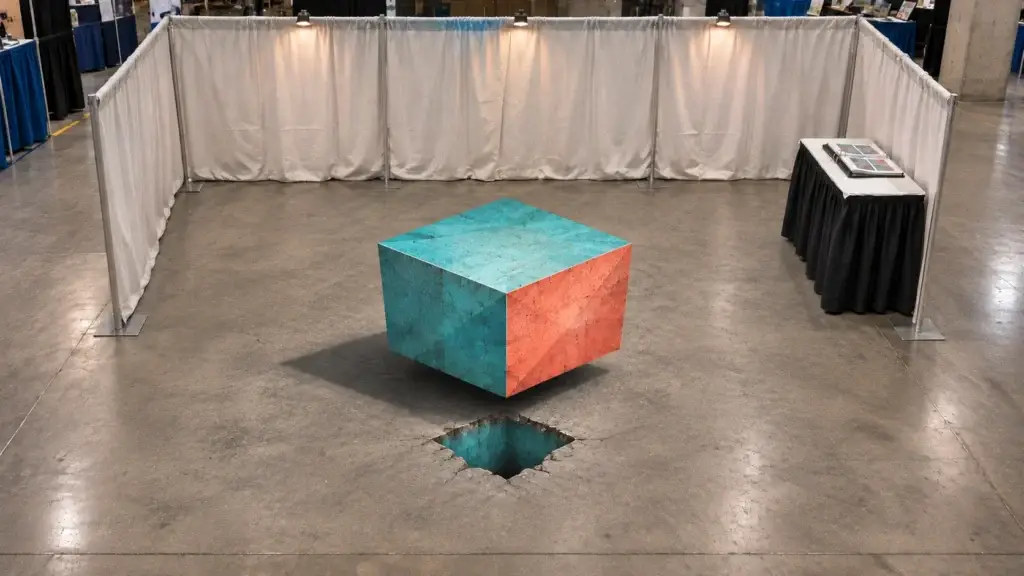
- A hole in the floor with a scene below, for a store entrance or an event
- Hopscotch, mazes and games in schools and family entertainment centers
- Sponsor logos that seem to stand up off the floor at a trade show or arena
Floors print with the Floor Series.
Walls
- A window or doorway onto a street, beach or skyline in an office or restaurant
- Hallways that look twice as deep
- Broken-wall scenes with something bursting through, for a gym, theater or game room
- Stair risers that line up into one picture from the bottom step
- Themed rooms for escape rooms, cinemas, arcades and party venues
Walls print with the Pro Series or the Tech Series. Compare the printers.
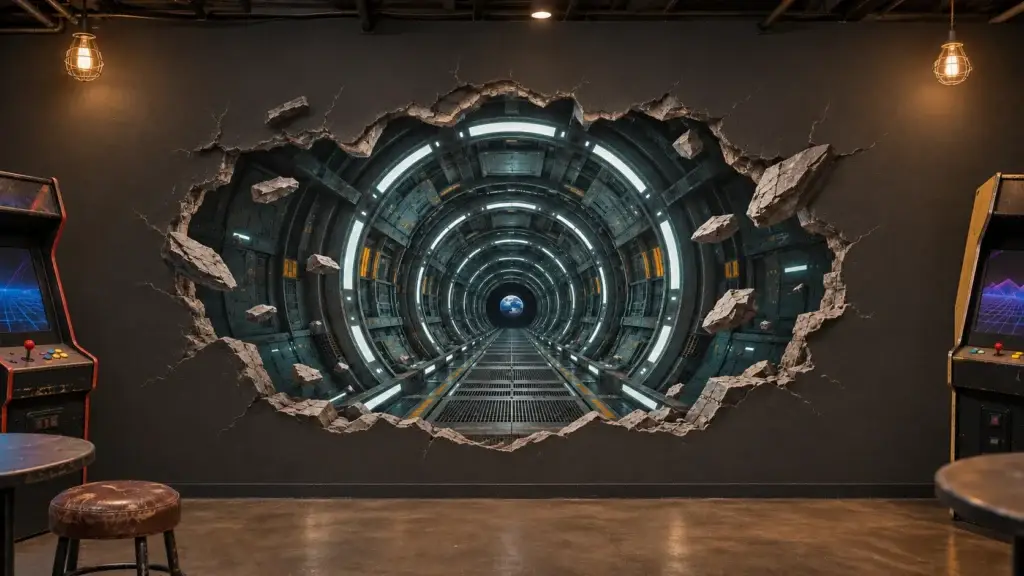
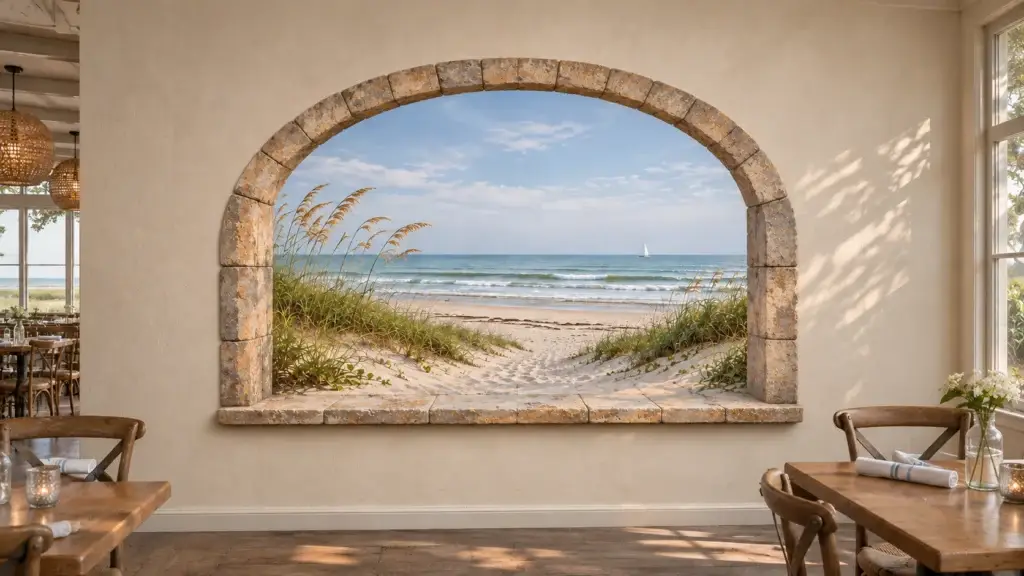
Photo walls
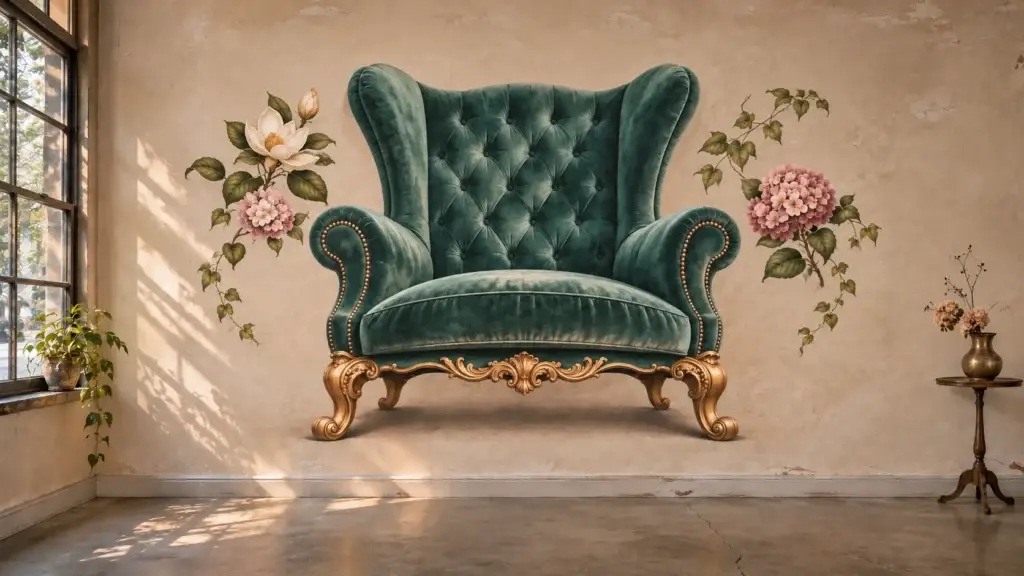
A photo wall is a 3D illusion built for a camera: wings, a giant chair, a doorway into somewhere else. Restaurants, bars, salons, gyms, boutiques and event venues buy them because every photo tags the business.
- Put the wall where people wait or line up
- Mark the standing spot on the floor
- Work the business name or handle into the frame
- Plan to change the design each season. Repeat work is the point.
What to plan for
- Pick one viewing spot. Most 3D art only lines up from one place, so build the design for that view.
- Design to the real space. Measure the wall or floor, the camera height and where people will stand.
- Match the light in the room. Shadows that fall the right way make the illusion hold.
- Print a test section first. A small corner shows you color and scale on the actual surface.
- Keep floor illusions off stairs, ramps and exits.
- Characters and logos from movies, games and brands are trademarks. Use original art, or get permission.
Start with the right base color
The surface is part of the picture. Before anything prints, decide how the art meets the wall or floor around it. There are two ways to do it.
- Paint a base color first. Roll the wall or floor in a background color that matches the design, then print over it. The art blends into the paint, there’s no hard edge, and the illusion reads deeper.
- Design to the color that’s already there. Build the background of the art from the surface itself, like the gray of a concrete floor or the cream of a plaster wall, so the print grows out of the surface instead of sitting on top of it.
Either way, the goal is no box around the art. Every rendering on this page is designed that way.
What it sells for
Most owners price printed jobs at $20 to $40 a square foot, depending on the surface and the design. A 3D piece can earn the top of that range, because the design takes more time and the result does more for the client. Ink runs about a dollar a square foot, counting practice and test prints, and most owners set a $500 minimum.
An 8 by 10 foot photo wall is 80 square feet, so roughly $1,600 to $3,200. Run your own numbers in the profit calculator.
How to pitch it
Lead with a mockup. Take a photo of their entrance, wall or floor, drop the 3D design onto it, and show them what a customer would see walking in. The best prospects are gyms, family entertainment centers, restaurants and bars, boutiques, schools, cinemas, and event and trade show producers.
The walk-in takes about 20 seconds:
“Hi, I’m [name] with [your business]. We print 3D illusion art straight onto walls and floors, right here in [city]. Can I show you what your entrance would look like with one?”
Then film the print going on. A time-lapse of a 3D floor coming to life is the kind of video that travels. How to film it.
Questions people ask
Is this 3D printing?
No. It’s a flat, full-color UV print straight onto the wall or floor. The 3D look comes from the artwork: perspective, shadow and scale.
Does the illusion work from every angle?
Most 3D art lines up best from one spot. Mark that spot on the floor so people know where to stand and where to take the photo.
Can you print a 3D illusion on a floor?
Yes, with the Floor Series. The surface decides the prep, so check the floor before you quote.
Where should a floor illusion not go?
Keep it off stairs, ramps and exits, and out of spaces where a startled step could cause a fall, like senior living and healthcare.
What surfaces can carry a 3D design?
Painted drywall, brick, concrete, glass, wood, tile and more. Rough surfaces print slower, and every surface has its own prep.
Should I paint the wall or floor before a 3D print?
It helps. Paint a base color that matches the background of the design and the print blends in with no hard edge, so the illusion reads deeper. Or design the background to match the color the surface already is.
Have a 3D wall or floor in mind? Send us a photo of the space and what you want on it. The team in Wilmington will tell you what to expect.
Wall printing ideas series: what owners print, space by space, and how to pitch it. Browse print ideas.
- Kids’ rooms and nurseries
- Home offices and video call walls
- Garages, basements and game rooms
- Hotels and short-term rentals
- Churches and worship spaces
- Dental, vet and wellness practices
- Senior living
- Salons, barbershops and small storefronts
- Dealerships and auto shops
- Museums, libraries and community spaces
- Fitness studios, yoga and spas
- Unexpected surfaces
- 3D illusion walls and floors