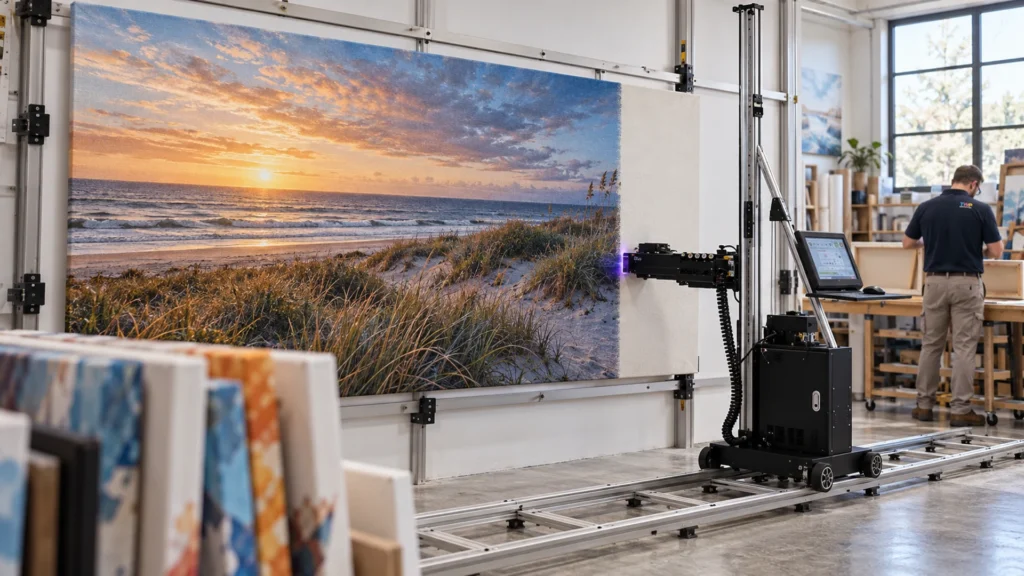
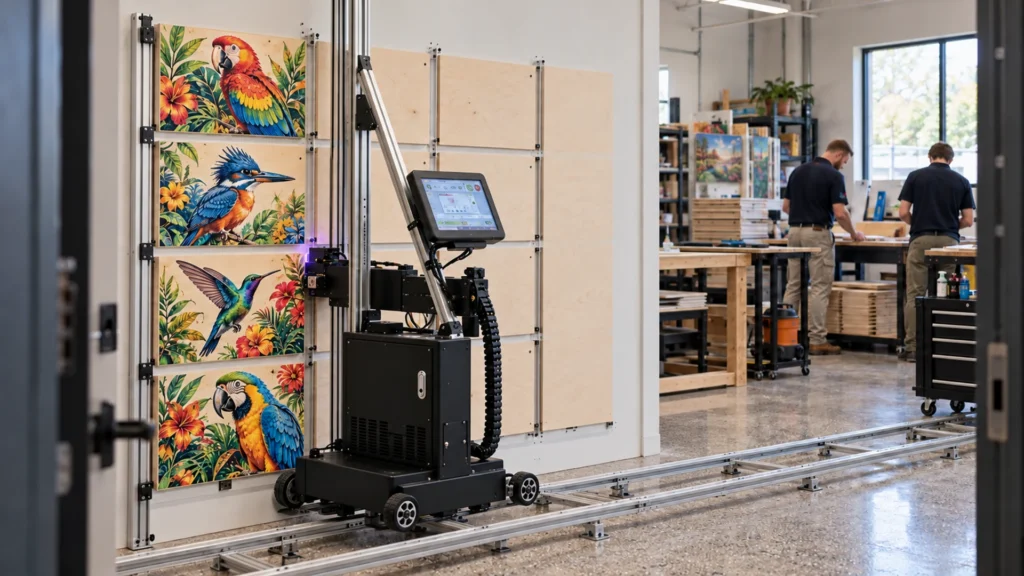
Most owners think of a wall printer as a machine that goes to the wall. It does. It also works in your own shop. Stand a panel upright, print it, and deliver a finished piece. That work fills slow weeks, rainy days and the days between on-site jobs.
What owners print in the shop
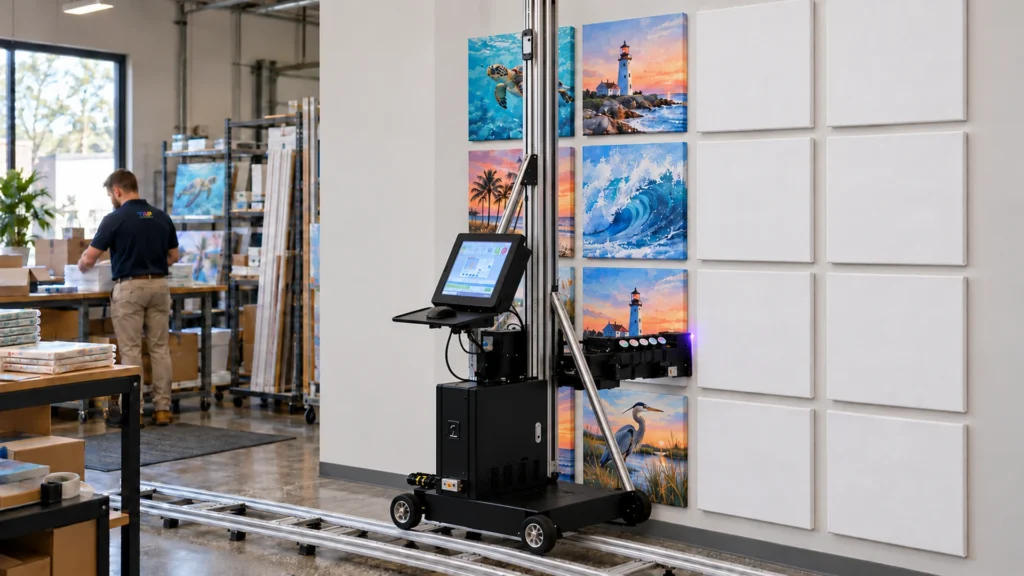
- Canvas. Print it, frame it and sell it as art, or print live at weddings and events.
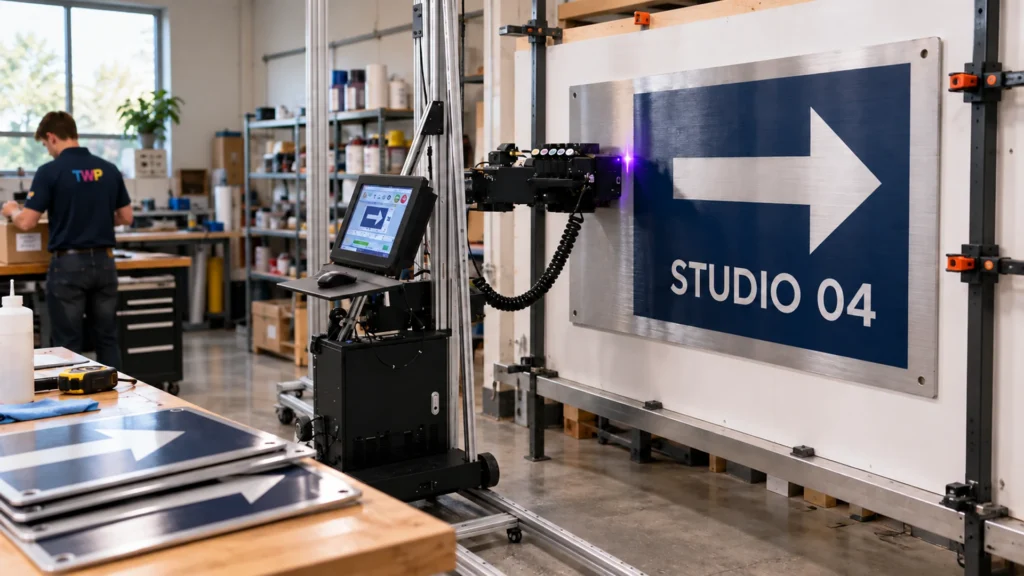
- Aluminum panels. Signs, wayfinding and restaurant panels, printed in the shop and installed on site.
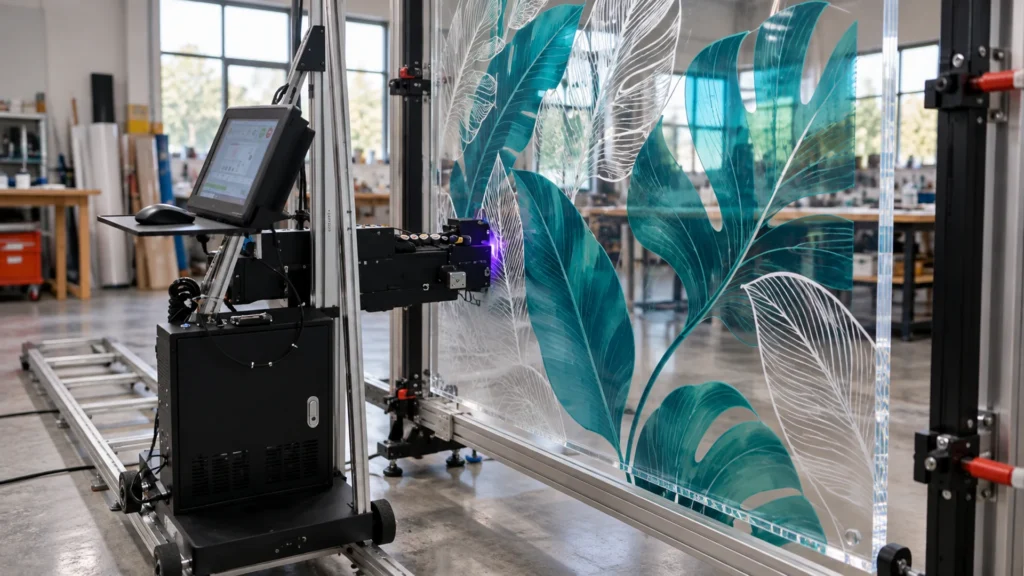
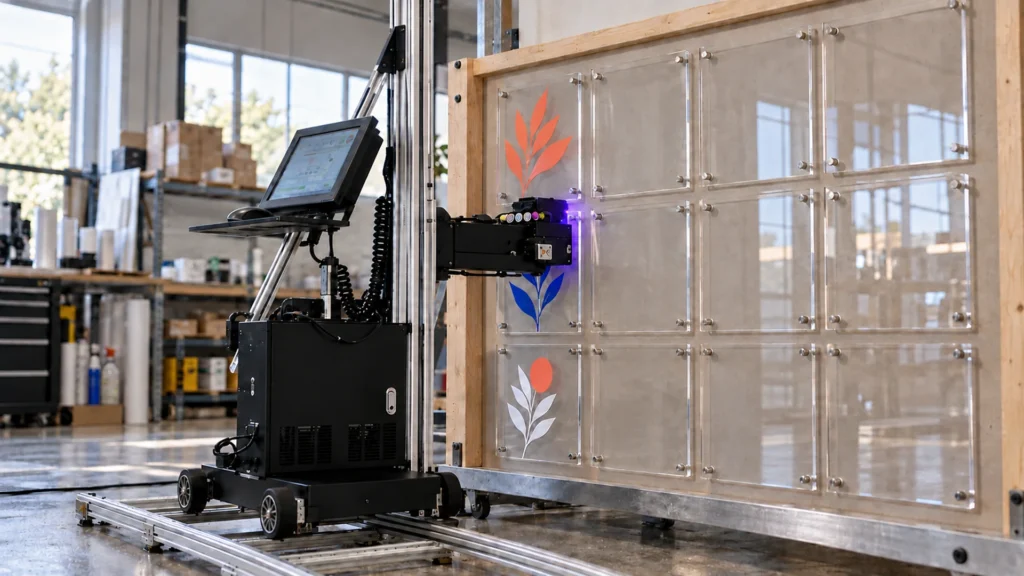
- Glass and acrylic. Partitions, displays and a stained glass look without stained glass prices.
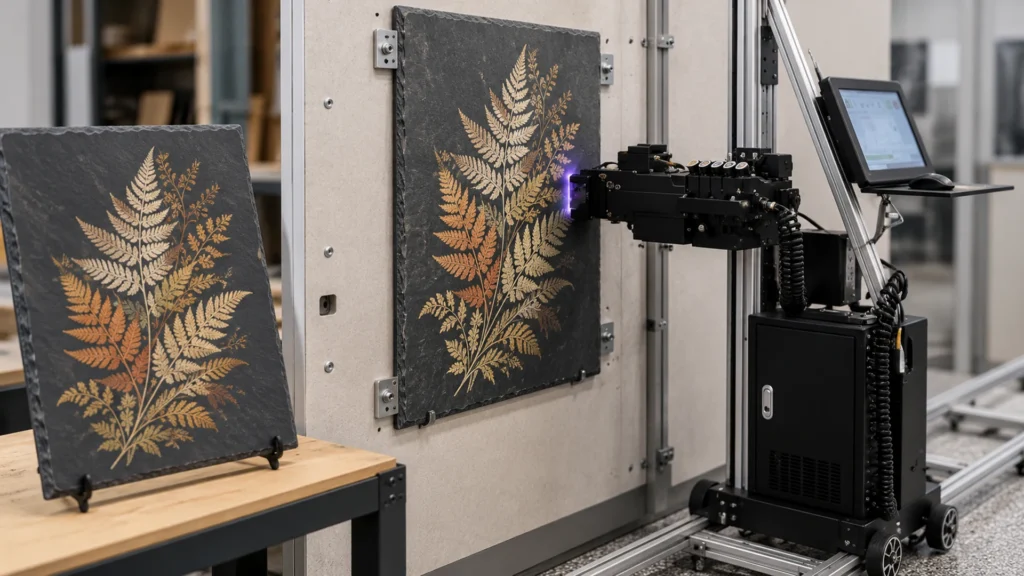
- Tile and stone. Tile murals and slate pieces, printed before they’re installed.
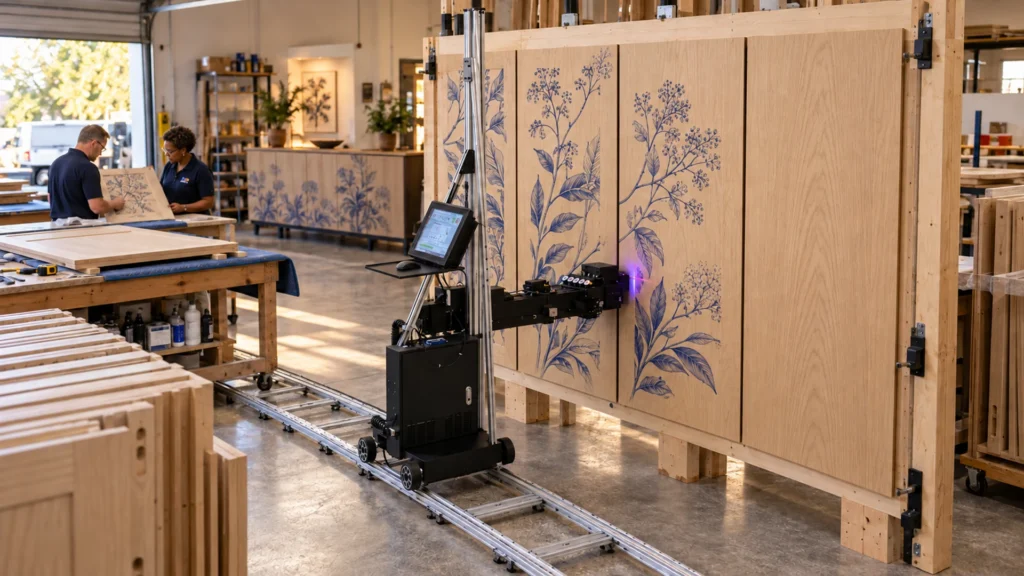
- Wood. Cabinet doors, furniture and signs.
When shop printing beats the wall
Sometimes the printer can’t reach the wall. A restaurant’s built-in bench seating, a finished space with no room for the track, or a surface that’s easier to print before it goes up. In those cases owners print aluminum panels or glass in the shop and install the finished piece. Printing before construction works the same way: skylights, partitions and panels get printed first and installed after.
Why it’s good for the business
- Steady work. Pieces you can print any day, not just when a wall is booked.
- New customers. Sign shops, cabinet makers, tile and stone suppliers, artists and designers.
- No site setup. Print in your own space and hand off finished pieces.
Batch it: one setup, many pieces
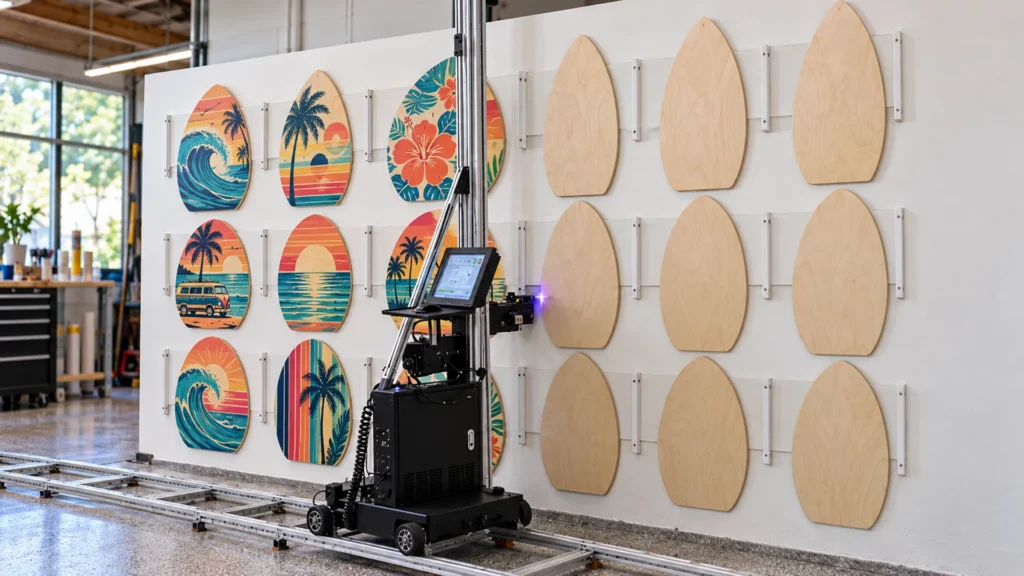
Shop work gets efficient when you print in batches. Mount a row of blanks on a frame, lay out the file once and print them all in one run. Change the design between pieces or repeat it across the whole set.
- Retail pieces. Canvas, wood rounds and skimboards you can sell at markets, shops and online.
- Sets for one client. Matching sign plates for a building, or a full run of tiles for a backsplash.
- Clear panels. Acrylic printed in color with white where it needs to read. See the white channel.
Lay it flat with the Floor Series
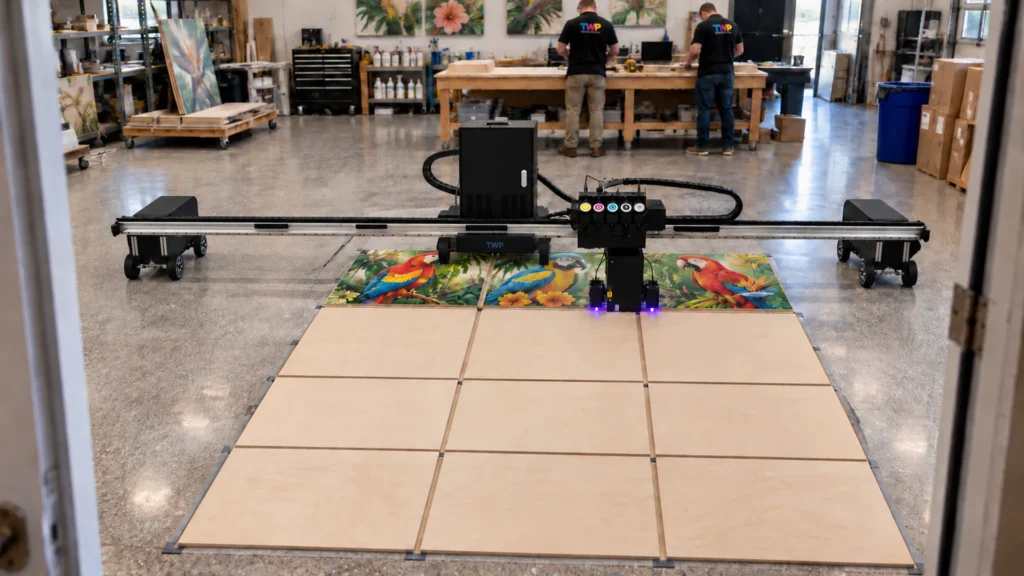
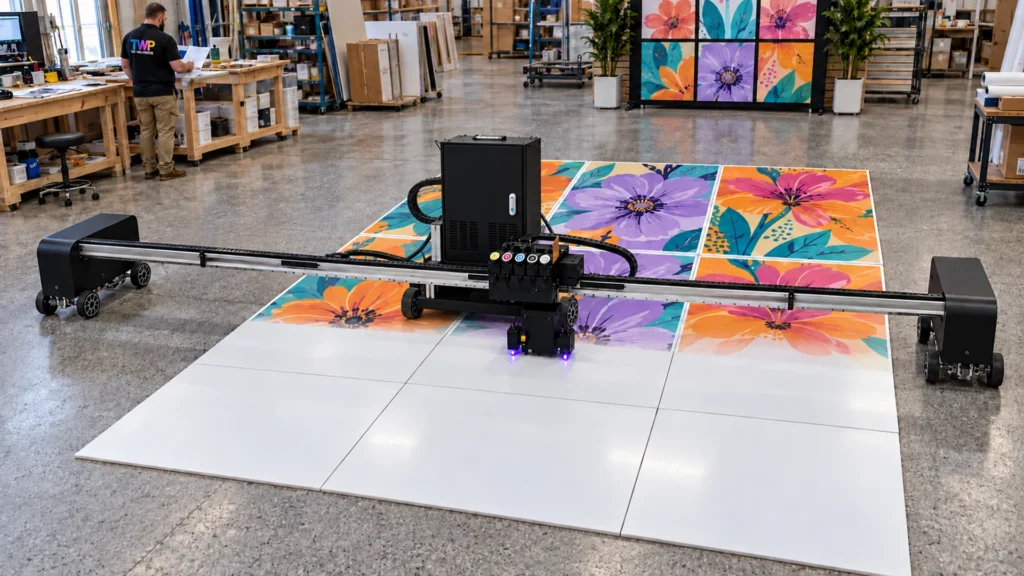
The Floor Series prints anything you can lay flat on the shop floor. It is often the easiest way to run a big batch: no frame to stand pieces upright, just line them up, place the file once and print the set.
How to set up for it
- Hold it flat and upright. The panel has to stay still while it prints. Ask the team how owners set up their frames.
- Test print every new material. Every surface takes ink differently, so run a test before you quote.
- Use the white layer. White ink is standard, so dark and clear materials print with a white layer under the color. Skip the white on clear material for a stained glass look.
- Price the rectangle. For odd shapes, price on the full rectangular area the print covers.
For more, see the in-your-shop ideas on print ideas.
Questions people ask
Can a wall printer print on canvas and panels?
Yes. Owners stand canvas, aluminum, acrylic, tile, slate and wood panels upright in the shop and print them. Each new material gets a test print first.
Do I need extra equipment to print panels?
The panel has to be held flat and upright while it prints. Owners set up simple frames in the shop, and the team can walk you through how others do it.
Which printer suits shop work?
Both the Pro Series and the Tech Series print vertical panels. The Tech Series fits the back of an SUV, and the Pro Series prints up to 11 feet and ships with hard-shell travel cases.
Want to walk through your own plan? Talk it through with the team in Wilmington. We’ll run the numbers for your market with you and answer the questions owners ask us most.
Business Blueprint series: the plan we walk through with new owners, one piece at a time. See the full Business Blueprint.
- How to build a wall printing business that runs without you
- Finding your first five wall printing clients
- Print in your shop: panels, canvas and signs between wall jobs
- Recurring wall printing work: refreshes, rollouts and property managers
- Every print is a live show: marketing a wall printing business with the work
- From design to print: the four-step wall printing workflow